
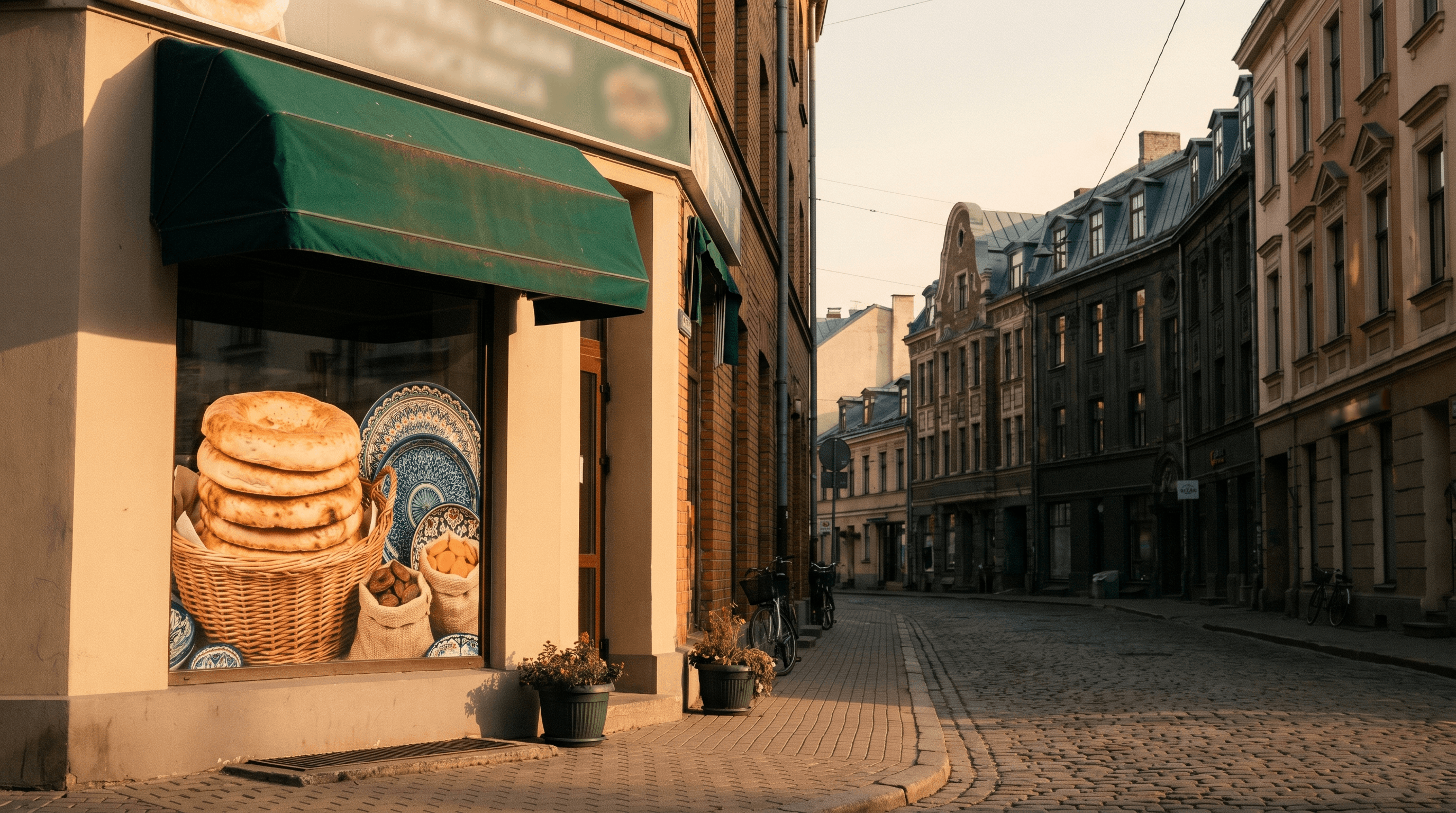
Eurostat: what the structural growth of the Central Asian diaspora means for FMCG in the Baltics and Scandinavia
According to Eurostat (dataset migr_pop1ctz, "Population on 1 January by age group, sex and citizenship", EU-27, citizenship KZ/UZ/KG/TJ/TM), the number of EU residents with Central Asian citizenship has been growing steadily over recent years. This is a statistical signal, and it changes the brief for category managers in the Baltics and Scandinavia. Retail chain shelves, HoReCa ranges and small ethnic shops are starting to adapt to a stable audience with spending power that wants recognisable products from its home cuisine and culture.
Uzbekistan itself has a population of about 38 million, and with established migration patterns in Latvia, Lithuania, Estonia, Sweden, Finland, Norway, Germany and Poland, the diaspora channel is becoming a full FMCG segment. For a producer in Khorezm, the Fergana Valley or Surkhandarya, this opens a second way into the Baltic and Scandinavian markets alongside a large retail-chain contract: the diaspora channel, where the entry threshold is relatively low.
The diaspora basket: steady categories and holiday peaks
The diaspora basket usually draws on six steady categories: plov rice (Laser, Devzira, Bugday-Goh, Khorezm), dried fruit (dried apricots, raisins, nuts), spices (zira, coriander, barberry, turmeric), halal meat, tea (black tea and kok-choy, the green tea) and handmade household goods (Rishtan ceramics, suzani, ikat). Within the basket there is a stable everyday core and holiday peaks tied to Navruz, Kurban Bayram, family celebrations and seasonal traditions.
- Everyday basket: plov rice, spices, tea, dried fruit, non (flatbread).
- Holiday basket: halal meat, sweets (chak-chak, navat), particular varieties of rice and spices.
- Gifts and household goods: Rishtan ceramics, suzani, ikat, choynaks and piyolas for tea drinking.
- Family B2B format: home catering orders for weddings, milestone birthdays and community events.
Where people buy: ethnic shops, marketplaces and central markets
Purchases are split across three channels. The first is small ethnic shops selling Uzbek, Central Asian and, more broadly, halal products in areas where the diaspora lives. The second is online marketplaces and delivery services, including local platforms in the Baltics and Scandinavia that add an Eastern European section or a halal shelf. The third is stalls at central city markets, such as Arkan Bazar at Riga Central Market, Nēģu iela 7, LV-1050.
Each of the three channels works differently. An ethnic shop brings a high average basket from regular customers and a steady weekly shop. A marketplace brings targeted demand for specific items, sensitive to packaging and delivery times. A central market draws a mixed crowd: diaspora shoppers, local residents of the capital, tourists and HoReCa chefs who come for spices and ingredients for a tasting menu.
Where demand concentrates: Riga, Stockholm, Berlin, Helsinki and their neighbours
Demand is spread across the eight cities we target for distribution: Riga, Vilnius, Tallinn, Stockholm, Oslo, Helsinki, Berlin and Warsaw. In Riga the diaspora overlaps with the tourist flow and with a local audience that knows Central Asian cooking from the shared post-Soviet past. In Stockholm and Berlin, multicultural urban demand is more pronounced, with a steady share of premium shoppers. In Helsinki and Tallinn the communities are smaller but close-knit, and regular customers account for a large, steady share of the average basket.
For a producer this means that one channel is not enough: the SKU portfolio has to reflect how demand varies from city to city. HoReCa groups in Stockholm may ask for premium spices and rice varieties with a verified regional origin, while in Riga and Tallinn mass-market formats for family cooking sell steadily. Deliveries to all these cities run along a common logistics axis through Latvia: the warehouse at Uriekstes iela 4A and pre-export checks on quality and labelling.
Signals for producers: what to build into a 2026 SKU portfolio
Eurostat figures, the diaspora basket and the channel map together point to a practical recommendation for the SKU portfolio. For 2026 it makes sense to plan three shelves at once: a core mass-market basket for ethnic shops, a premium diaspora range for marketplaces and central markets, and a separate B2B block for HoReCa, with products made to the specifications of chefs and catering chains. A single operating base in Latvia ties these together: it consolidates batches, runs the pre-export check and distributes the goods to the destination countries.
- Build three parallel SKU shelves: mass diaspora, premium diaspora and the B2B HoReCa channel.
- Choose pack formats and labelling languages for the target countries (LV, LT, ET, SV, FI, NO, DE, PL).
- Fix the pilot locations: Riga to start with, then Stockholm and Berlin as the next steps.
- Agree the seasonal delivery calendar and the holiday peaks with the Uriekstes iela 4A operating site.
How the diaspora channel links to HoReCa B2B and chain retail
In the Baltics and Scandinavia the diaspora channel is a natural step towards B2B channels. After six to twelve months of steady presence in ethnic shops, at central markets and on online marketplaces, the producer has evidence of real demand in a specific city. That data (purchase frequency, average basket, seasonal peaks, packaging and variety preferences) carries weight in talks with a retail chain's category manager or a HoReCa distributor, who can see that the product already sells in that city.
At the same time, the diaspora channel shapes the brand's cultural positioning. A shopper who first comes across the product at Riga Central Market or in an ethnic shop in Berlin brings their own cultural context to it: the language, the tea-drinking tradition, the familiar ways of serving plov and non. That context later gives rise to festival formats, pop-up dinners with guest chefs and press material for a wider audience, the very promotional tools that open the door to retail chains and HoReCa menus.
The structural growth of the Central Asian diaspora in the EU that Eurostat records is real demand, and it is time to turn it into product categories and specific SKUs.