
Kuraga from the northern regions
Seasonal lots with sorting and preparation of packaging for retail and wholesale.
Countries and destinations
Direction with a strong dried fruit and garden category.
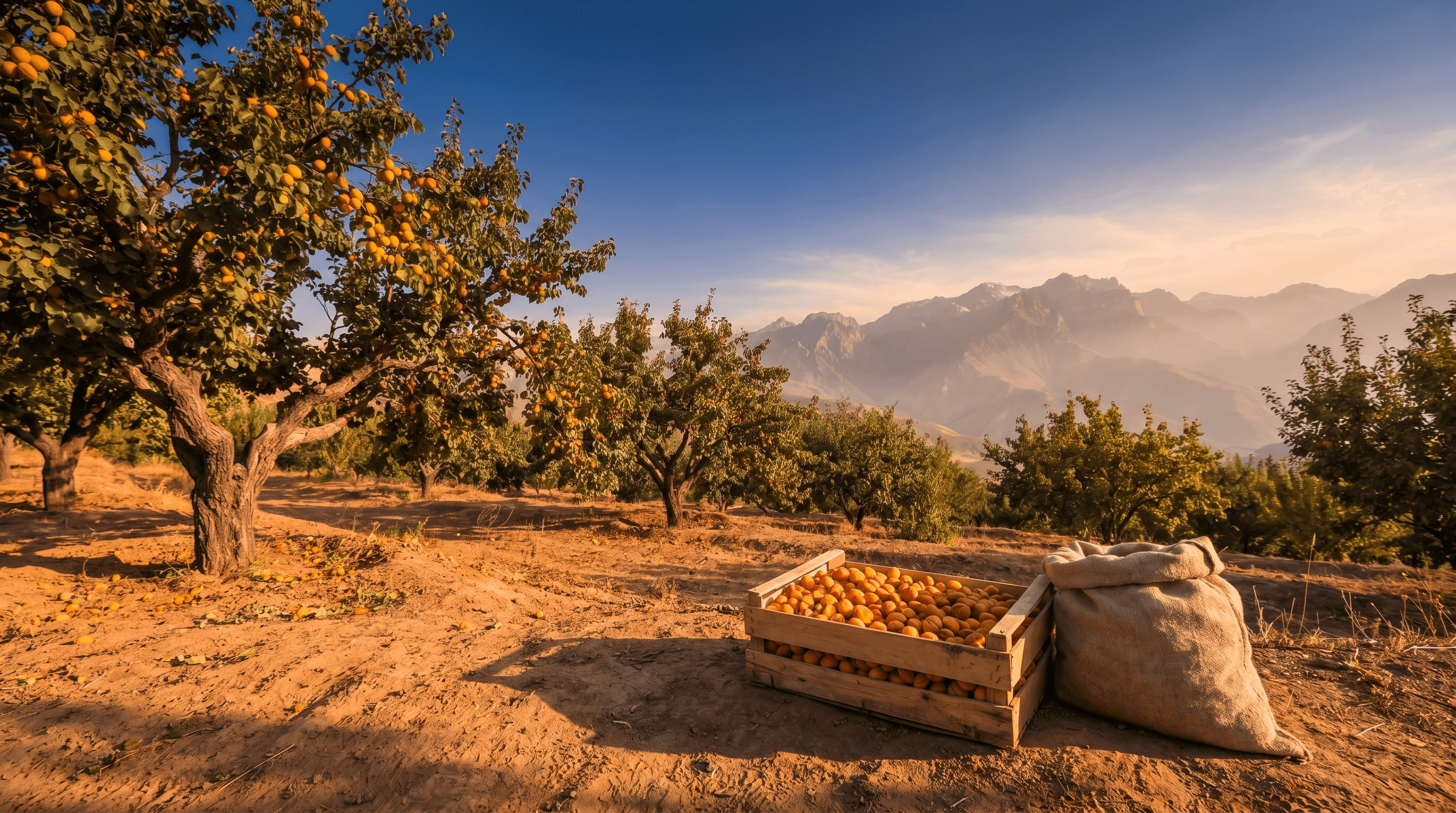
Tajikistan in our matrix gives a stable fruit and nut group, including dried apricots from Sughd and adjacent positions from northern regions such as Istaravshan and Khujand. We build supply as a managed cycle: batch preparation, sanitary checks, marking for the destination market and route consolidation through Riga. This format helps the buyer to obtain stable batches without loss of traceability.
Brief answer
In Tajikistan, we organise procurement, compliance and delivery to the EU through one operational loop in Latvia. For Tajikistan, we link category selection, pre-export control and route planning into a single cycle. This allows you to hold the delivery time, confirm the origin of the goods and adapt the marking in advance to the country of destination. For Tajikistan, we separately plan the collection and dehydration season to evenly distribute supplies and avoid congestion during peak months.
Five directions
The categories are selected based on real demand in the EU, availability of the supplier and the ability to withstand a single compliance and traceability circuit.
Seasonal lots with sorting and preparation of packaging for retail and wholesale.
Lines for the ingredient market, hotel and restaurant channel and packaged retail.
Positions for the bakery and snack segment with control of batch parameters.
Combining multiple categories into a single delivery to reduce logistics load.
Small batches for channel testing before contract scaling.
EU regulation
Tajikistan operates as part of a five-country procurement matrix, where each shipment follows the same control logic: confirmation of origin, sanitary and phytosanitary checks for food categories, label validation and documentation collection for the importer. This increases the comparability of data between shipments and facilitates the internal audit of the buyer.
Tajikistan differs from its neighbours in the depth of its categories and the way its routes are set up. Here we plan the harvest and drying season separately, to spread supplies evenly and avoid overload in the peak months. We therefore set the batch requirements and the shipping calendar for this specific origin and its target channel in the EU.
Logistics and execution
Before shipment, we agree the category, volume, delivery window and acceptable route cost, then choose the transport mode and a fallback option. For sensitive food groups, the priorities are unbroken batch control and correct labelling. For non-food categories, they are intact goods, sound packaging and correct product classification.
After arriving in Riga, the parties are consolidated and distributed through channels: distributors, chains, hotel and restaurant channel and specialised wholesale. This approach maintains a transparent delivery status for both parties and allows quick assortment adjustments without breaking the overall execution cycle.
Frequent questions
The basic categories are those that simultaneously show stable demand and meet compliance requirements in the EU. For Tajikistan, we check commercial potential alongside consistent origin, repeatable quality and ready documentation. This filter reduces the risk of launching an assortment that cannot be scaled after the first successful shipment. This reduces the risk of urgent fixes and maintains predictable turnover across each category.
The risk is reduced due to a pre-agreed schedule of checkpoints: confirmation of the batch, verification of documents, final validation of markings, choice of base and reserve route. If a deviation occurs before sending, we adjust the parameter at the source, not at the EU border. It is cheaper, faster and gives the purchase a more predictable replenishment cycle. As a result, the team makes decisions on volume, route and the next replenishment cycle faster.
The buyer receives one operating circuit instead of a chain of disparate intermediaries: a single contractual process, a structured package of documents and a transparent status of shipment from source to recipient. For internal teams, this is convenient because commercial, logistics and quality data do not diverge between departments. As a result, procurement coordination is accelerated and it is easier to manage repeat deliveries. For the buyer, this means a more stable service and transparent status of each delivery before acceptance.
Yes, the pilot is the recommended launch format. On the pilot, we check the actual route speed, channel reaction, completeness of documents and the behaviour of the category in the real sale. After that, we fix what to scale in the next cycle: the volume, range or geography of the channel. This approach protects the budget and provides the basis for a long-term framework agreement. This format is especially useful in seasonal peaks, when it is important to maintain the rhythm and discipline of documents.
Marking is checked before shipment on the destination market: language, mandatory elements, correct identification of the lot and accompanying information. We do not postpone this task until after arrival in the EU, because it is the late fixes that most often result in delays and additional costs. Prevalidation makes the entrance to the channel more smooth and predictable.
Send the category, target market, volume and desired launch date. We will prepare a working scenario: source profile, compliance sequence, route scheme and pilot format. In the answer, we separately note critical points where it is better to lay a reserve on time or by packaging. This helps move quickly from discussion to controlled launch. In addition, this makes reporting comparable and helps to more accurately plan the expansion of the range.
Next step
Tell us the category, volume and sales channel. We will prepare a route through Riga, a set of checkpoints and a roadmap for a pilot shipment into the EU market.