
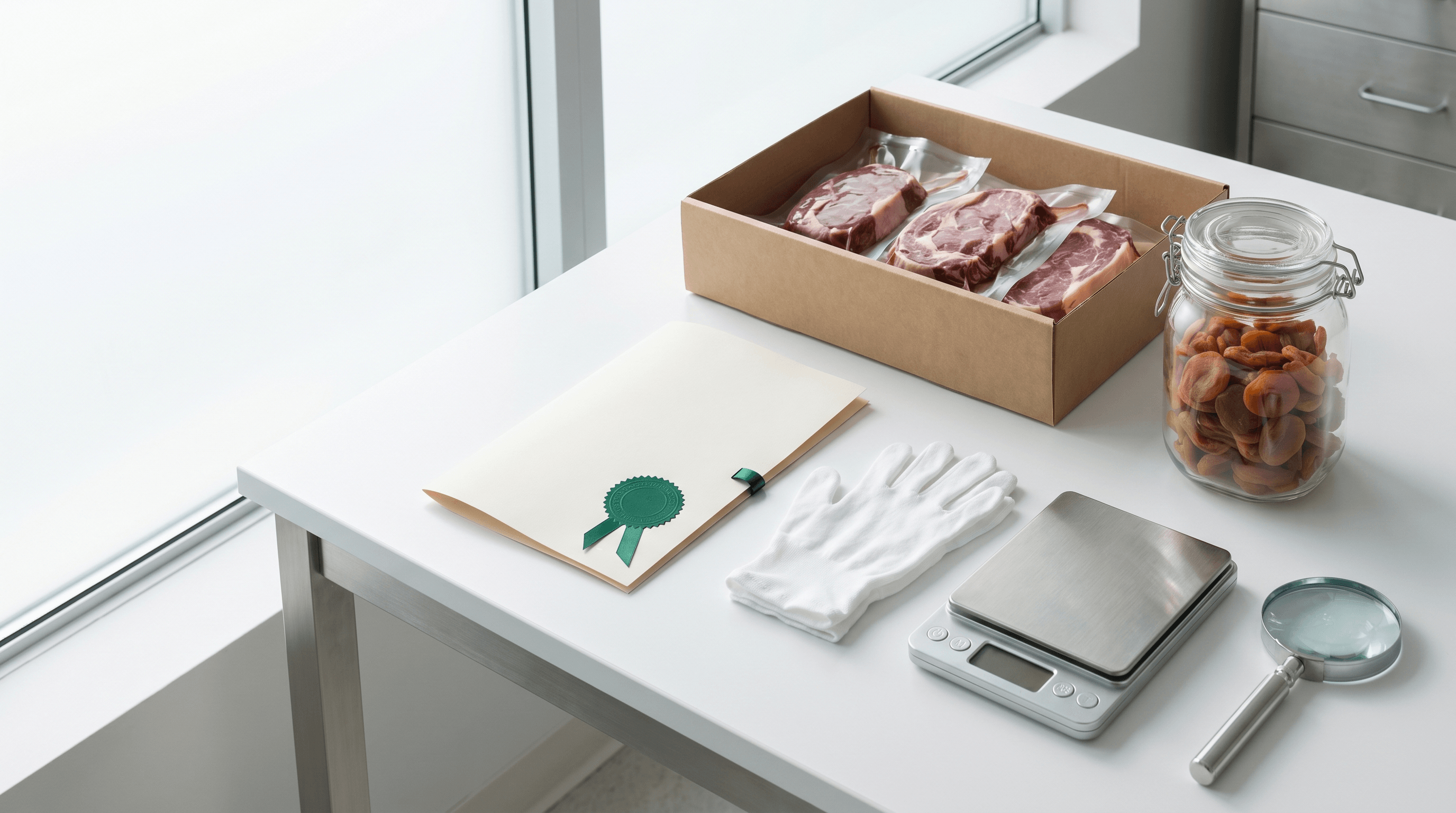
Two layers of a halal project: religious halal and EU food law
There is no single halal certification scheme in the EU that the Union itself has approved. On the EU market, halal works as a religious and commercial layer, that is, private certification under a chosen methodology (IHI, SMIIC, GIMDES) with an audit by a recognised body in the importing or producing country. Regulatory clearance of a batch into the EU is a separate matter. EU food law, import procedures, veterinary certificates for animal products, hygiene rules and consumer labelling all apply, mandatorily and in parallel, whatever the halal status. A halal project for the EU is therefore always built from two layers, religious and regulatory, and neither replaces the other.
A map of halal standards: where IHI, SMIIC and GIMDES agree and where they differ
There are dozens of halal standards in the world, but three come up in practical work with the European market. IHI, the International Halal Integrity Alliance, brings certification bodies together and maintains a common technical vocabulary. SMIIC, the standards and metrology institute of the Organisation of Islamic Cooperation (OIC), publishes the OIC/SMIIC series, which many OIC member states have in practice adopted as their base framework.
GIMDES is a Turkish halal body with its own audit methodology, traditionally strict on additives, enzymes and alcohol anywhere in the process chain. The three systems share the general list of haram ingredients and the principles of ritual slaughter. They diverge on which additives are permitted (E-numbers of animal origin, enzymes of microbial and fungal origin) and on the requirements for separate production lines.
In practice, the same ingredient can be accepted under SMIIC and rejected under GIMDES, so a halal certification project starts with the choice of methodological anchor.
EU Regulations 178/2002, 852/2004 and 853/2004: the legal backbone
A halal certificate does not override EU food law. Regulation (EC) No 178/2002 sets the general food safety principles and, in Article 18, batch traceability. Regulation (EC) No 852/2004 sets hygiene requirements for premises, equipment, staff and contamination control, and it applies to all food production, halal included.
Regulation (EC) No 853/2004 adds a separate layer of requirements for products of animal origin. It sets the rules for slaughtering, cutting, chilling and transporting meat, and the principles for approving third countries as permitted sources. For halal meat this regulation is decisive: without an approved source and an official veterinary certificate, the meat cannot be imported into the EU, however flawless the halal audit.
Halal Latvia: the bridge between the halal standard and the PVD audit
Our partner Halal Latvia (reg. No 40003917168, certifying since 2009) is a halal certification body that works in coordination with the Latvian Food and Veterinary Service (Pārtikas un veterinārais dienests, PVD). This link matters because a buyer in the EU looks beyond the halal mark on the pack: they also check the producer's regulatory standing in the country where the batch physically entered the Union.
Halal Latvia acts as a methodological translator. It organises the halal audit to an agreed methodology (usually based on SMIIC, taking IHI into account), produces a report that a buyer in Germany, Sweden or Finland can work with, and stays within the legal framework of Latvian food control. That gives assurance on two fronts: religious assurance for the end consumer and regulatory assurance for the retail chain's buyer.
The importer dossier: seven required documents for the first batch
For a first shipment of halal product to the EU, a document pack has to be ready for checking at the border and at the buyer's goods-in. What goes into it depends on the category, but the basic set is as follows.
- A halal certificate for the batch or the production site, issued by a recognised body and naming the standard (IHI, SMIIC or GIMDES).
- A veterinary certificate from the country of origin for meat and other products of animal origin (in a format recognised by the EU).
- A product specification listing the ingredients, with confirmation of their halal status.
- Evidence of batch traceability: lot code, date, shift and series (Article 18 of Regulation (EC) No 178/2002).
- A hygiene protocol for the production line under Regulation (EC) No 852/2004 (and No 853/2004 for products of animal origin).
- Proof of preferential origin: for goods from GSP countries, the exporter's statement on origin with its REX number.
- A label in the language of the destination country that complies with Regulation (EU) No 1169/2011, including the 14 allergens and the nutrition declaration.
Passing the first audit cleanly: where it usually goes wrong
Most findings at a first halal audit for the EU repeat from project to project. The first failure point is shared lines: the halal batch runs on the same equipment as non-halal product without a cleaning cycle. The second concerns additives and processing aids (enzymes, gelatine, emulsifiers) whose halal status is not confirmed in the dossier.
The third arises when the labelling contradicts the halal methodology: the mark is on the pack, but the ingredients include one that the chosen standard does not allow. The fourth is lost traceability under 178/2002: the lot code is on the carton but missing from the production log. If these four points are closed at the pre-export check, the chances of passing the first audit without findings are noticeably higher.
Halal labelling in the EU: where the mark goes and which languages
A halal mark on EU packaging does not replace the requirements of Regulation (EU) No 1169/2011. In the languages of the destination country, the label must give the name of the food, the ingredients list with the 14 allergens emphasised, the net quantity, the date of minimum durability, the country of origin where it is mandatory (Article 26) and a nutrition declaration per 100 g. The halal mark goes in a visible area next to the name of the food and must not cover any of the mandatory particulars.
For the Baltics, Sweden and Finland, the typical language set is Latvian, Lithuanian, Estonian, Swedish and Finnish. Germany needs German and Poland needs Polish. The languages can share one side of the pack or be spread across several sides, but the font-size requirement (an x-height of at least 1.2 mm) applies to each language separately.
For halal products in the EU it also helps to distinguish between "mass market" and "niche halal store" categories. In mass retail, the halal mark sits next to the product name as a clear signal to Muslim shoppers without distracting anyone else. In specialist halal shops, the mark comes with extra information: the standard applied (SMIIC, IHI, GIMDES), the certificate number, its validity period and a contact for verification. This information can go on the back of the pack or on an accompanying leaflet.
Halal works in the EU where the Islamic methodological framework is linked to food control in the country of entry. Without that link, the certificate is just paper with no backing in food law.