
Who buys in HoReCa: buyer types and channels
In the Baltics and Scandinavia, the single word HoReCa covers four different types of buyer, each working to its own logic. The chef of an independent restaurant is responsible for a specific menu and orders for a defined seasonal set of dishes. The F&B director of a hotel or restaurant group covers several kitchens and works through framework contracts with distributors. The catering manager plans volumes around large events such as corporate parties, weddings and festivals. A HoReCa distributor is a professional intermediary that runs a warehouse in the destination country and supplies dozens of outlets.
For a producer, this means that a pitch of "we have Uzbek products" hardly works in HoReCa. To win real orders, you need to reach the right type of buyer straight away and speak their language: variety and specification for the chef, a framework contract and consistent batches for the hotel, peak volumes and lead times for the caterer, and a stable category shelf with clear margins for the distributor.
The chef's specification: rice variety, zira format, serving piyola
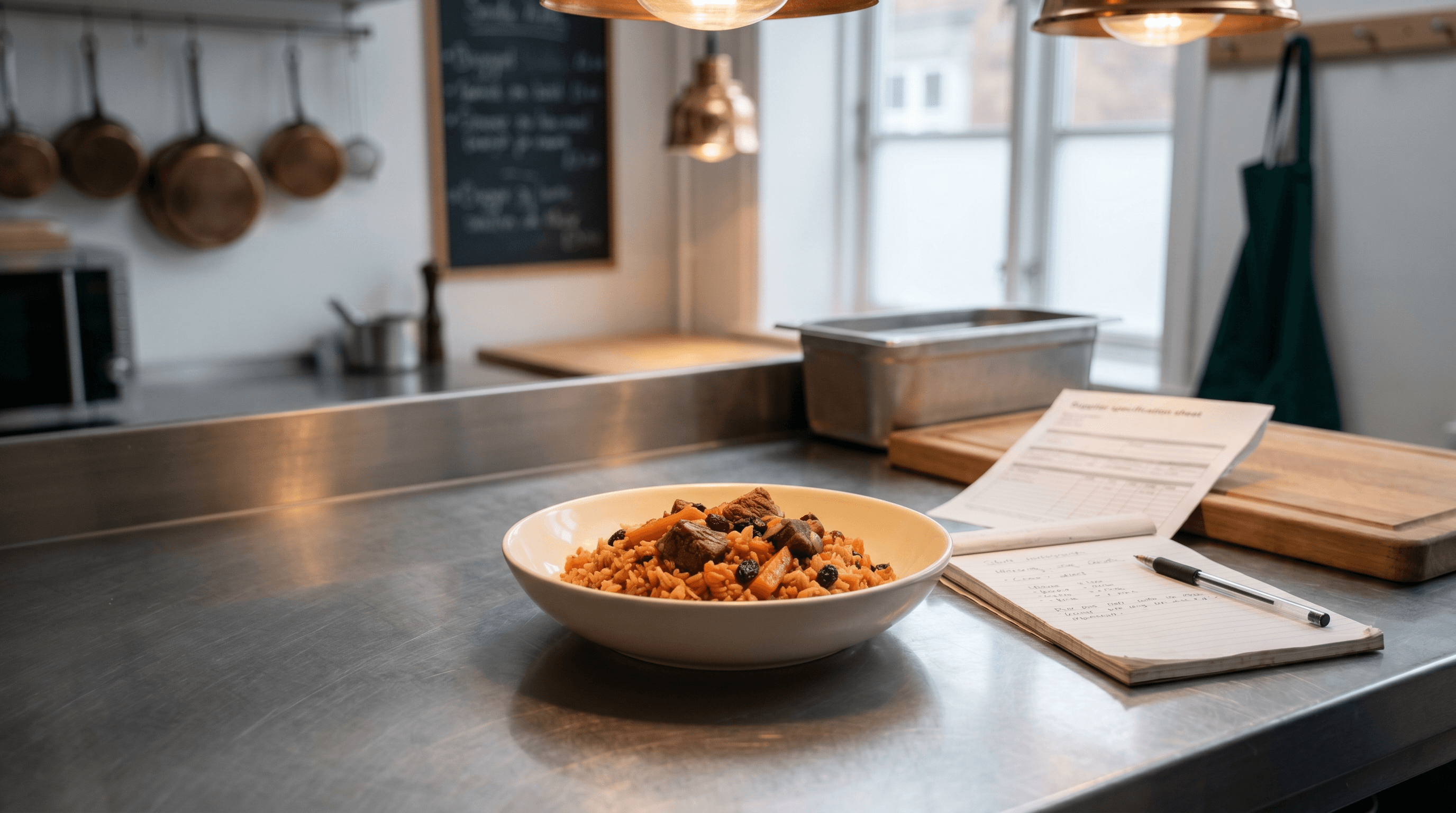
The chef of a classic Uzbek restaurant in Riga, a tasting-menu restaurant in Stockholm or a local-cuisine project in Helsinki orders a specific variety for a specific dish. For classic plov in a traditional cast-iron kazan, Devzira works better: a dense medium-grain variety with a rich flavour that holds its shape through long, slow cooking. For everyday plov and tasting formats, chefs more often choose Laser as the more affordable and versatile variety. Bugday-Goh and Khorezm rice go on the menu as regional accents.
- Rice: Devzira for classic plov, Laser for everyday plov, Bugday-Goh and Khorezm rice as regional accents.
- Spices: black zira (Bunium persicum) for classic plov, white zira (Cuminum cyminum) for curries and all-purpose blends, coriander and barberry as separate lines.
- Dried fruit for dessert menus and breakfasts: dried apricots from Surkhandarya (Uzbekistan) and Sughd (Tajikistan), raisins from Khorezm, nuts (walnuts from Arslanbob in Kyrgyzstan, Uzbek almonds and pistachios).
- Craft serving ware: Rishtan piyolas, choynaks and ceramic serving dishes for tasting menus and chef-led projects.
Seasonal menu cycles: what to plan six months ahead
Northern Europe lives by distinct seasons, and restaurant menus in Riga, Stockholm, Berlin and Helsinki change several times a year. Spring and summer menus lean towards light dishes with dried apricots, raisins, nuts and herbs. Here the Uzbek category comes in through salads, plov with greens (bahor plov), cold starters with dried apricots and nuts, and tea rituals with piyolas and Rishtan ceramics. Autumn and winter menus are built on hearty dishes: classic plov with dried apricots and chickpeas, shurpa, lagman, manty and samsa. For these menus, the share of spices, meat and richer rice varieties goes up.
For a producer, this means that a HoReCa order is built as a programme for the whole season. A chef often sets the menu several months before it launches, the purchasing team plans batches around that menu, and the supplier has to deliver the volumes to the agreed calendar. A missed delivery at the seasonal peak or unreliable delivery dates destroy trust far faster than a single bad batch in retail.
Direct contract or distributor: which format when
The HoReCa channel runs on two working formats. A direct contract between the producer and the chef (with the trading house as operating partner) suits steady volumes, premium categories and large restaurant chains with their own purchasing department. Small restaurants, hotels and caterers that order little and often are a natural fit for a HoReCa distributor and its single warehouse in the destination country.
In practice, a producer's category usually runs through both formats in parallel. Premium lines (artisan piyolas from Rishtan, premium zira, rice varieties for tasting menus) go through a direct contract. Volume lines (everyday rice, spices, dried fruit for hotel breakfasts and catering) go through the distributor. A single operating base in Latvia makes both models easier: batches are consolidated in one place, pass pre-export checks and are then routed to channels according to the type of customer.
Promotion formats: festivals, pop-ups, press breakfasts
The most effective way to open the category to HoReCa is direct contact with chefs: at Uzbek food festivals with chef-designed menus, pop-up dinners with guest chefs from Tashkent, Samarkand or Bukhara, press breakfasts for F&B journalists and buyers, and tasting sessions for hotel groups. At these events a chef tries the product in a real kitchen, sees it in the context of Uzbek tradition and knows straight away which dish it will go into.
- Choose target cities: for example, Riga as the starting point, then Stockholm and Berlin.
- Draw up specifications by category (rice, spices, dried fruit, craft, tea) and fix them in the technical annex to the contract.
- Agree a seasonal delivery calendar covering the next six months of menus.
- Choose the format: a direct contract for premium lines, a distributor for the volume shelf.
- Plan a promotion cycle: one festival or pop-up every six months in each priority city.
Onboarding documents and an operating base at a warehouse in Latvia
Onboarding an Uzbek category with a restaurant or hotel chain in the Baltics and Scandinavia relies on the same standard set every time: product specification, batch certificate with quality parameters, proof of origin, confirmation of labelling under Regulation (EU) No 1169/2011 and, where needed, a halal certificate and veterinary and sanitary documents. On the producer side, we put this package together once and reuse it for each new chef or chain buyer, adding only that customer's specific requests.
Running operations through the warehouse at Uriekstes iela 4A in Riga takes a large share of the logistics and paperwork off the chef. The batch is consolidated at one site, passes pre-export checks, is packed in HoReCa or distributor format and then goes on the final leg to the buyer in the city concerned. For the chef, this means one counterparty in Latvia, one set of documents, an agreed seasonal calendar and a single point of responsibility for batch consistency, whichever Central Asian country grew the rice or harvested the zira.
A chef buys a rice variety, a zira format and a piyola for serving: specific items for a specific dish. An "Uzbek category" as such means little in a kitchen.