
Route and replenishment schedule
Forming supplies from Riga to Riga with a baseline and backup scenario for the actual demand of the channel.
City market page
City-core network: warehouse, distributors and operational replenishment.
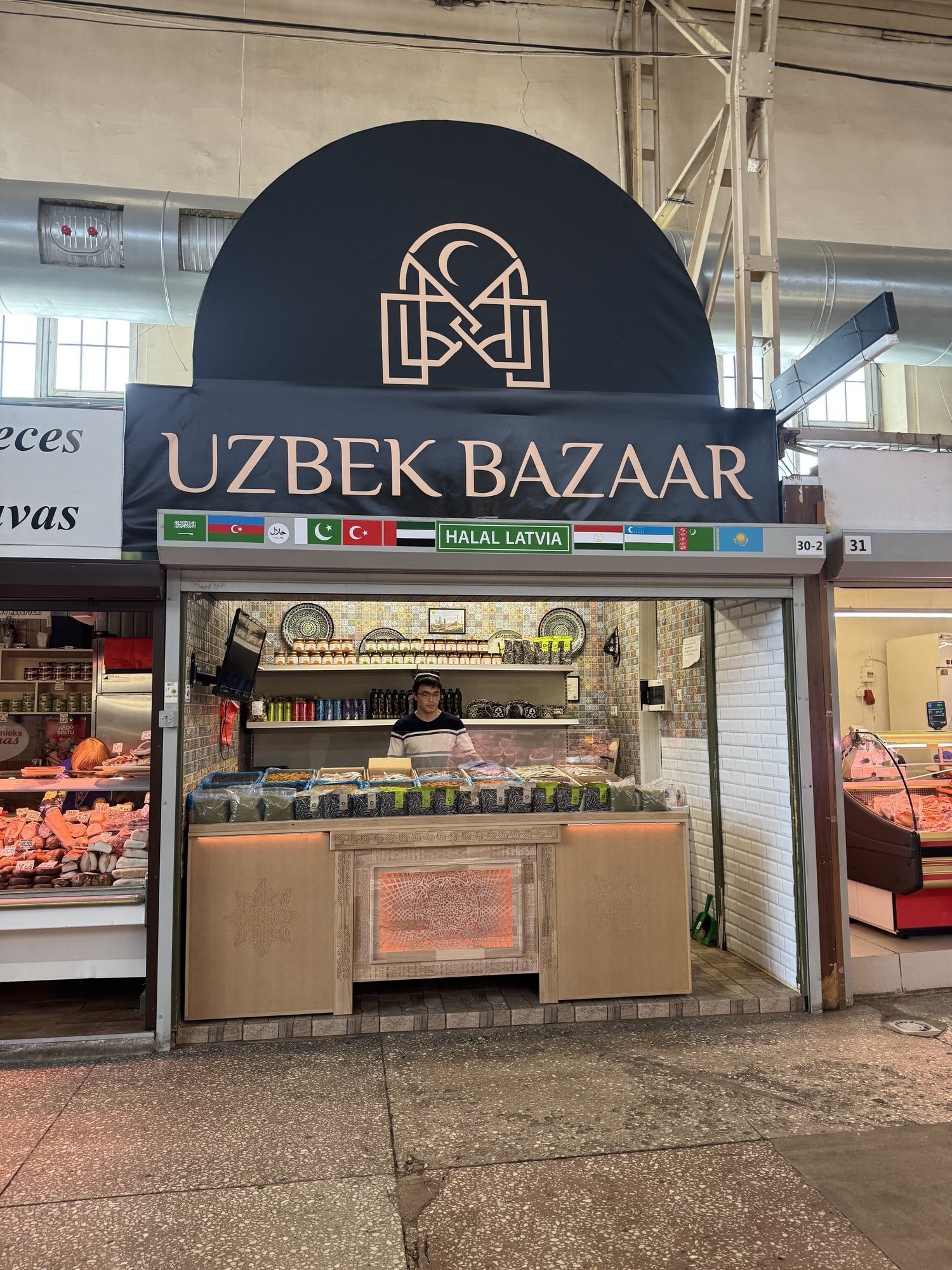
Riga is Trade House's main operating city: we have a warehouse at Uriekstes iela 4A, where we consolidate lots for the whole network. In the city we work with distributors, retail chain buyers, hotels and restaurants, and the Arkan Bazar stall at Riga Central Market. This gives us fast feedback on the range and lets us adjust supplies quickly before scaling to other capitals.
Direct answer
We deliver from the Riga hub to Riga with the adaptation of the range, documents and schedule to local demand. For the city of Riga, we are building a separate scenario: target channels, replenishment frequency, buyer profile and document flow format. This allows us to link the speed of delivery with the quality of execution and maintain a stable level of service for partners in Latvia.
Eight city hubs
The model for Riga combines the route, category strategy and transparent document flow under the urban demand profile.
Forming supplies from Riga to Riga with a baseline and backup scenario for the actual demand of the channel.
We divide the launch by type of buyer in Riga: distributor, network, hotel and restaurant channel and specialised shops.
We check the readiness of the consignment before shipment, so that the entrance to the Riga Canal passes without delay and unnecessary adjustments.
We are building an assortment matrix for Riga, where the basic positions go regularly, and the expansion is connected by confirmed sales.
We maintain a unified communication and reporting loop for the city of Riga, so that supply decisions are made quickly and transparently.
Route architecture
The delivery plan to Riga begins with an assessment of the real demand through the channels and only then proceeds to the schedule of shipments. We do not use a universal template: we take into account the type of buyer, the depth of the assortment and the requirements for document circulation for this city. This approach reduces the number of urgent corrections and helps to start the game in a working commercial rhythm.
The Riga knot ensures control of the consignment before dispatch: a set of documents, marking readiness and packaging condition. Further, we supply to Riga with a transparent status for purchase and sales. This is especially important when scaling, when volumes, the number of commodity items and the number of acceptance points are growing simultaneously.
Commercial execution
After the first shipments, we assess the actual turnover by category and adjust the replenishment frequency. For Riga, this allows you not to keep excess stock and at the same time avoid availability dips during peak periods. We widen the range only once sales confirm the demand.
Communication in the city of Riga is conducted in a single account loop: procurement, logistics and commerce work with one version of data on the batch. This speeds up deviation decisions, simplifies reporting and creates a sustainable basis for a long-term contract in Latvia.
Frequent questions
Priority is determined by the structure of urban demand: usually it is a combination of distributors, network purchases, a hotel and restaurant channel and specialty stores. For Riga, we set channels with different replenishment rhythms and different depths of the assortment, so that the basic positions are stable, and expanded categories are connected without overloading the warehouse and budget. This increases turnover and improves the quality of commercial launch.
Usually, a step-by-step format works better: starting with a pilot matrix commodity position, then expanding based on actual sales. For Riga, this reduces the risk of excess stock and allows you to quickly adjust the line for the buyer. After the stabilisation of the pilot, a regular schedule is fixed, and additional categories and new acceptance points are added to the circuit. This format is especially useful in seasonal peaks, when it is important to maintain the rhythm and discipline of documents.
We set up a base scenario and a back-up in advance, so a problem on one leg does not stop the whole delivery. Critical items are checked before dispatch: documents, marking, packaging and lot status. This approach takes corrections to an early stage, where they are cheaper and faster. As a result, delivery comes to the destination city more predictably for purchase and sales.
Yes, that's standard practice. We separate the basic urban basket from the diaspora positions and manage them as two related streams. For Riga, this helps to maintain a stable turnover in the mass channel and at the same time maintain niche demand without undue pressure on the stock. This balance is important for the long and sustainable performance of the category. In addition, this makes reporting comparable and helps to more accurately plan the expansion of the range.
You need a short brief: category, volume, type of buyer and launch window. After that, we return the scenario for Riga: route, set of checkpoints, document requirements and pilot order. In the answer, we immediately note where the reserve will be required for the term and which commodity items are best left for the second stage. This helps to quickly move to a practical launch.
After the launch, we conduct regular analysis: replenishment rate, movement of commodity position, deviations on documents and actual sales dynamics. In the city of Riga, decisions are made in a single account circuit, so adjustments in the route and assortment are implemented without long approvals. This mode maintains the stability of the service and creates the basis for scaling to neighboring cities. It also simplifies internal control of procurement, logistics and quality without breaking data between stages.
Route design
Send the category, planned volume and type of buyer for Riga. We will prepare a working route, a set of control points and a pilot scenario.